Personal Logo

Personal Logo

Monday, July 15, 2013

Sebastopol Cittaslow: Holding onto a Way of Life


©Copyright 2013: Richard von Sternberg, All Rights Reserved

I grew up in the Los Angeles area in a little town named Hermosa Beach in the late 40’s and early 50’s.  This beach town was isolated from the greater Los Angeles megalopolis because there were no freeways yet.  Hence, my childhood was spent in an idyllic small town.  We had good schools and a warm and friendly small-town lifestyle.  When we went to visit my grandmother in Orange County, we left our small town and drove through miles and miles of bean fields, dairies and, then, orange groves before we finally arrived in Santa Ana (where I was born).  My grandfather was a lawyer in Santa Ana and moved there because he loved the small town lifestyle surrounded by rural, agricultural space.

Looking back on that simple, slow life in Southern California seems like only a dream now.  It did something to me to grow up as Los Angeles grew up around me, spinning almost out of control as roads were built, freeways spiderwebbed their way into communities evaporating the simple, sweet lifestyle, forever changing small towns into areas next to other areas, making lines of demarcations noted by “Welcome to……” signs almost meaningless as one community abutted another and another and another until the cultural identity of each town succumbed to the monolithic greater Los Angeles identity.

There were enclaves of uniqueness, many of which, due to their special geography, high concentrations of famous people, or other variance from the monolithic norm, even to this day maintain a special aura about them (such as Beverly Hills, the Hollywood Hills, Hancock Park, Malibu, Laguna, South Bay beach towns like Redondo, Manhattan, Hermosa, Palos Verdes, etc.); for the most part, however LA achieved a reputation for miles and miles of concrete and asphalt sameness as developers, fueled by the paranoid Cold-War aerospace industry growth explosion in LA, the epicenter, where the biggest names in American aircraft were headquartering themselves, began on a boom-like scale to plant shopping centers and housing tracts like Johnny Appleseed all over Southern California.  It began to take longer and longer to “get through LA” by car on the nearly unnavigable web of freeways.

Far from thriving on the vibrancy emanating from the local cultural revolution, I bailed when I was 20, craving a way to re-create for myself an environment that fostered small-town-slower-way-of-life rustic simplicity.  Instead of having to drive the better part of an afternoon to get to a place where traffic thinned out and houses weren’t stacked against, above and below each other, I sought a place where rural was within walking distance of downtown, where a municipality of 20 thousand, instead of being one of hundreds and hundreds of such abutting each other, stood out as being among the larger municipalities in the area.

In other words, I set out on a quality-of-life quest and ended up in Sonoma County.  Here, shortly after arriving, I struggled to withdraw from the state of being where world-famous classical musicians, opera stars, ballet performers, photographers, movie-stars, poets, jazz greats, rock stars, folksingers, museum displays, surfing safaris, shopping boulevards were minutes away, where food, merchandise, entertainment and fashion were readily available around the clock.
 

Sonoma State College was the first name of Sonoma
State University.  This photo was taken before
any landscaping.  Students called it San Quentin North.

I enrolled in the local university, called Sonoma State College at the time, where I happened upon, among the litany of general education courses required for a liberal arts degree, a cultural geography course that surveyed the series of steps a spot on the Earth goes through in its evolution from bare land, agricultural beginnings and mercantile establishments to city center and cultural identity and, finally, to individual identity.  After that, I looked at Sonoma County differently because, unlike LA, where older sections of town were those over 20 years, I realized that I was able to look around me and see the living history of that evolution of culture in smaller towns, separated from each other by miles of agricultural stewardship, a county where Spain had sent one of its prized generals to create the new California over a hundred years before I was born.

I could see the symbiotic importance of the dairies, wineries, orchards, pastures filled with sheep and beef cattle, farms, poultry-keepers, bee-keepers and apple-processors, all sorts of agricultural enterprises, to the communities and the connectedness of the communities to the local artists and managers of the land.  The symbiosis was palpable to a student of anthropology or Zen, but, at the same time, was so natural here that it mostly went unnoticed as water does to a fish.

HOW CITTASLOW BEGAN

The post WW-2 times lured most of the Western world into super-industrialization and began to weave technology into the everyday lives of citizens around the world.  Parts of cities everywhere began to look like those counterparts in cities everywhere else as chain-store consciousness blossomed and corporate agribusiness invented itself, carrying the lessons of business learned in big cities back out the land and those in charge of its husbandry. 

The image has become commonplace of small armies of air conditioned combines marching through fields of grain at harvest time automatically doing by machine power in minutes what centuries ago took thousands of people several days.  Technology has changed the vision in all of us of what we can do with our world, how we post WW-2 citizens manage the symbiosis of rural and urban.
 

It is a stretch of consciousness beyond anything believed possible by any citizen alive in the 15th century, for example, to envision a farmer harnessing his work animals to plow the earth and simultaneously envision the many rotations of the wheels of history that have led to tractor technology in farmers’ fields today.  Just as there have been social movements in response to such things as the clear-cutting of mahogany forests in Southeast Asia, mutilation of elephants for their tusks, alligators for purses and shoes, clear-cutting and strip-mining along the Amazon, and the many others that come to mind, a kind of movement favoring natural, local grown food and environmentally-friendly manufactured products has woven its way into our daily lives that began with students of the 60’s wanting organic, macrobiotic diets and led all the way to today’s more generally organic attitude, not restricting the adjective “organic” to foodstuffs, but extending into clothing, bedding, construction materials, personal relationships, you name it.

Evidence of this new organic attitude can be found in department stores, corporate supermarkets, hotels with all natural bed linens, to name a few obvious ones.  In fact, the attitude has become assimilated into many of our governing bodies through (a) enforcement strategies such as those used to insure food labeled “organic” really is, as well as (b) endorsement of and support for organizations dedicated to perpetuating and enriching the concepts of local and organic, of the small-town symbiosis of urban and rural.

The city of Sebastopol has a working relationship with such organizations, one of which came from Italy where it was born in 1999, inspired by a movement spreading around the world for decades known as the Slow Food Movement, on whose web site “slow food” is explained this way:

“Slow Food is an idea, a way of living and a way of eating. It is part of a global, grassroots movement with thousands of members in over 150 countries, which links the pleasure of food with a commitment to community and the environment.”

A group of mayors of small towns in Italy met and, whether intending to or not, began a movement that has come to our part of the world as well.  It is explained by Tasha Beauchamp this way:

“The Cittaslow movement was started in Italy in 1999 when several mayors in Tuscany decided they wanted to apply the principles of the Slow Food movement to urban planning and commercial development in their towns. They developed the 6 Slow City priorities and began to proudly brand their towns as ‘Cittaslow’. Other mayors asked to participate and eventually they had requests from around the world as many small towns struggle to preserve their local culture while growing their economies in a sustainable manner.”

The number of participating towns is approaching 200.  Here is a link to the list of all the Cittaslow towns in the world:


71 of the towns on the list are in Italy indicating the movement has really caught on there. What follows is taken directly from the web site of the international Cittaslow organization.  It appears to have been translated from Italian into English and is not written exactly according to our linguistic conventions, but it states well what the Italian mayors had in mind.

“The Movement of cittaslow was born in 1999 through the Paolo Saturnini’s brilliant intuition , past Mayor of Greve in Chianti, a little town of Tuscany.
The new idea of considering the town itself and thinking of a different way of development, based on the improving of life quality, moved him to spread his thoughts all over our country. Fastly his ideals were endorsed by Mayors of towns of Bra (Francesco Guida) , Orvieto ( Stefano Cimicchi) and Positano ( Domenico Marrone) as well as they met later the president of slow food Carlo Petrini’s support. The main goal of cittaslow was, and still is today, to enlarge the philosophy of Slow Food to local communities and to government of towns, applying the concepts of ecogastronomy at practice of everyday life.
Municipalities which join the association are motivated by curios people of a recovered time, where man is still protagonist of the slow and healthy succession of seasons, respectful of citizens’ health , the authenticity of products and good food, rich of fascinating craft traditions of valuable works of art, squares, theaters, shops, cafés, restaurants, places of the spirit and unspoiled landscapes, characterized by spontaneity of religious rites, respect of traditions through the joy of a slow and quiet living.”


There are 3 Cittaslow towns in the United States:  Sebastopol, Sonoma and Fairfax. I am a more recent addition to the 11 steering committee members of the Sebastopol branch of Cittaslow where we have adopted six priorities of the Cittaslow movement:

● Support locally made products and agriculture
            ● Celebrate our culture and history
            ● Welcome visitors (tourism) and embrace neighbors (community cohesion)
            ● Use technology wisely
            ● Promote the health of the environment
            ● Develop community-friendly inftrasturcture

To be designated a Cittaslow town is an honor, not something that is automatically granted to those who apply.  A Cittaslow organization is NOT independent from the city it is in.  The City Council is involved.

It is explained this way by Tasha Beauchamp of the Cittaslow steering committee:

“To receive the designation, the City Council must complete a questionnaire of 60 questions describing how the town demonstrates its commitment to the 6 Slow City priorities. It is a rigorous process. Only 30% of the towns that inquire actually start the application, and only half of those actually finish it. Representatives from the international movement review city applications and score questionnaire results based on the strength of the City's answers. To qualify as Cittaslow, a city must earn at least 50% of the total possible points and commit itself to improving in the areas in which it is weakest. (Perhaps not surprisingly, Sebastopol was very strong in all of the priorities EXCEPT community cohesion.)

“There are cities that do not meet the standards set by the international Cittaslow organization, and they are denied the designation. Once every 5 years a Cittaslow city must apply for re-certification and demonstrate improvements in their weakest areas. Cities that have not made adequate improvements have been de-certified.
“Standards are high, but the intention is to support cities to do their best to improve. This is where the national organization (Cittaslow USA in our case) comes in to assist with organizational development, strategic planning, and networking between Cittaslow cities.

“Every city has its own model for leveraging the designation. Many of the cities in Europe, for instance, have a Department of Cittaslow in the mayor's office. In Korea, Cittaslow is an active part of the university and urban planning system. Cittaslow is brand new in the United States (the first U.S. city to become Cittaslow was in 2009). Given the economic times and a vastly different city government structure, U.S. Cittaslow cities need to rely more on a grass roots effort. This is the model Sebastopol has adopted: the public/­private partnership.”

Two of the members of the Sebastopol Cittaslow steering committee are members of the Sebastopol City Council.  It was one of these two, Sarah Gurney, former mayor of Sebastopol who learned about Cittaslow from the Sonoma contingent and felt Sebastopol was a perfect fit for the concept and started the ball rolling.  About a decade after its inception as a movement in Italy, Sarah brought Cittaslow here
Sonoma City Council Member Laurie Gallian, Cittaslow USA Director Virginia Hubbell, and Sebastopol Mayor Sarah Glade Gurney with the Certificate designating Sebastopol as a member of Cittaslow, July 20, 2010


EXEMPLARY CITTASLOW PROJECT—The banner

When I came on board, the steering committee wanted to expand.  They had spent a couple of years (after the above photo) organizing and had made many contacts in the community of downtown business owners, as well as the community at large, and were ready to take steps to become more visible, to become a non-profit corporation, and raise funds needed to put into motion what viable non-profit corporations typically do as they metamorphose from theoretical beginnings into a local institution.

At the web site that Marty Roberts created for us,


you can read about us and see how we are an all-volunteer bridge organization in the community.  The “bridge” I mention refers to our role in connecting one person or organization to another in order to help make it easier for an important community project to come to fruition.

As of this writing, one such project serves well as an example: the hanging of large banners highlighting community pride in the legendary Gravenstein apple.  In this case the “bridge” is between Cittaslow and Slow Food.  The local Slow Food group has organized an effort to “Save the Gravenstein”, the details of which are here:


As a result of the collaboration of the two organizations, two very large banners were raised prominently so as to be visible to drivers going either direction along Sebastopol’s central thoroughfare.  

When I first came to Sonoma County in the 1960’s, Gravenstein apple farmers were busy as were local canners and distributors.  At harvest time it smelled like applesauce everywhere around Sebastopol.  Driving around the hills and valleys between Sebastopol and Forestville took you through tens of thousands of acres of apple orchards.  In spring the perfume released by the millions of apple blossoms added a pleasant sensory experience to the uplift you took in from the pink and white sight of that sea of blossoms.


Anybody with apples for sale who could get them to the local dryer, canner, juicer or baby-food maker in small amounts or large truck loads could exchange their pickings for money on the spot during the harvest season.  I rode in a truck with a Sonoma restauranteur from his back yard, where he had filled two large crates of apples and loaded them into the back of the truck.  With no appointment we drove to a baby-food company’s apple buying facility in Sebastopol, waited in line until it was our turn, and were finally inspected by a buyer who gave the truck, its contents – including driver and passenger – the “once over”, scrutinizing carefully, then raised one eyebrow, removed all semblances of friendliness from his countenance, replacing them with suspicion and said: “No worms, right?”  After a round of assurances from my restauranteur friend, a billfold opened, a few hundred dollars changed hands and we drove off.  The same scenario repeated itself thousands of times over the course of the few days of harvest as the centuries-old practice of commerce infused the local growers with the cash they sought and the processors with the stuff of profitability.

Those days are gone.  The apple farmers moved out, first to Washington state, then, over the years, to China where apples are now grown by the megaton along with everything else.  What Cittaslow and those whose motto is “Save the Gravenstein” want is not the impossible dream of magically turning back clocks and calendars, but, as apple orchards continue to be ripped up and replaced with wine-grape vineyards, as the great kaleidoscope of life reshapes, it is natural to want to preserve some human connection to our common past, to “Save the Gravenstein”, the apple that is a perfect symbol for Sebastopol, tart and sweet at the same time, refreshing, alive with taste.

We are the kind of community that was ripe for the opportunity to become Cittaslow and, even with the mysterious way this is put: “Municipalities which join the association are motivated by curios people of a recovered time, where man is still protagonist of the slow and healthy succession of seasons, respectful of citizens’ health , the authenticity of products and good food………” we qualify.  In Sebastopol we are people who are intrigued by our history and we want to live in such a way that we heroize the slowing down of life and display great regard for the symbiosis of our local population with the artists, farmers and merchants who dot our landscape.  With the blessing of our Sebastopol City Council and the International Cittaslow Organization, Sebastopol is now officially designated Cittaslow.

Here is a list of all those currently serving as volunteers to Cittaslow Sebastopol:

Tasha Beauchamp - Co-chair
Clare Najarian - Co-chair
Carol Capria - Treasurer
Sarah Glade Gurney - City liaison
Robert Jacob - City liaison
Deborah Morris
Marty Roberts
Annie Dobbs-Kramer
Meg Mizutani
Angie Monette
Richard von Sternberg

Monday, April 22, 2013

Rhododendrons Revisited where Heaven Meets Earth

Subtitle: Color Show that Rivals Opals and Diamonds

©Copyright 2013: Richard von Sternberg, All Rights Reserved
Photographs by Richard von Sternberg, All Rights Reserved 
 

About 2 years ago I posted a blog about Sonoma Horticultural Nursery because I had just visited the place and become, once again, mesmerized by the extraordinary play of color that the rhododendrons all over the 8 acres of paradise were firing off in all directions for all to see and be lifted by.  It is such an amazing place, and only a few minutes from where I live.  The reward one gets from this nursery is akin to that experienced at Descanso Gardens, Butchart Gardens, DuPont Gardens: places one would have to fly and drive to that take hours, days, to get to.
 

The 3 famous gardens I mention here are highly established tourist Meccas that are exemplary symbols of haute culture, places on the world-wide tourist map with mega million dollar maintenance budgets, places where rich and famous people have weddings and history wafts its way around the grounds with the perfume emanating from the floral landscape.  Sonoma Horticultural is not in that league, of course, but it leaves a profound impression on its visitors during the few days a year when the rhododendron fireworks show sets each visitor’s heart vibrating in tune to the palpable beauty everywhere in this rustic and rural setting to the south of Sebastopol.

I just returned from my last visit there so far this year.  I have been several times to take photographs for this post.  I learned this year that it is better to go multiple times during the spring because there are ongoing stages of color bursts due to the fact that the original owner and the current owner have planted many varieties of rhododendrons and azaleas as well as several other exotic plant species (such as magnolia, hydrangea, camellia, ferns, and a host of others).
 

This year I became acquainted with the owner of Sonoma Horticultural, Mr. Polo de Lorenzo who hails from the Islas Canarias (the Canary Islands) which are an archipelago to the west of Morocco, colonized by Spain centuries ago.  Polo and I spoke Spanish to each other before I knew where he was from.  My Spanish language acquisition began 50 years ago and has been highly influenced by Mexican Spanish, especially so since I lived in Morelia, Michoacan in the 1970’s.  When I speak Spanish, my “accent” is michoacano more than anything else.  At university when I studied Spanish linguistics, I learned of all the dialects of Spanish including the four major ones: the Castillian Spanish of the Iberian peninsula, the South American one primarily characterized by Argentinian persuasion, the North American one spoken in Mexico and countries just south, and, finally, the Caribbean one exemplified by speakers in Cuba and Puerto Rico.  In Cuba particularly, the “s” sound is “swallowed” in many words and the vocabulary/vernacular is unlike that of any other part of the Spanish speaking world.  An example would be the Caribbean Spanish word for bus (which in most Spanish speaking countries is autobus or omnibus).  In Cuba a bus is Guagua—pronounced WA-wa.  As I listened to Polo speaking Spanish, I had to ask him where he was from.  When he told me, I asked him how he said “bus” in Spanish and, you guessed it:  Guagua was his answer.  Many people who left the Canary Islands ended up in Cuba and Puerto Rico over the centuries.

Polo purchased Sonoma Horticultural from its first developer in 1976 and began to fill in the blanks around the property.  The first owner’s initial planting thrust was magnolia trees. 


They were planted so long ago that, when they bloom, they look like white-petaled Magnolia skyscrapers. 
Polo planted rhododendrons and exotic plants all around the big pond on the property, put in walking bridges, a gazebo, strolling paths, fountains, greenhouses, lathhouses and an arched arbor stroll-way reminiscent of fairy tales, all dotted with rhododendrons and azaleas, some of which have grown up along tall trees, some of which have bushed out and become trees themselves, that burst out deeply gratifying blooms in chalky white, cotton candy pink, ruby red, magenta, violet and many other striking hues.

The Magnolias were blooming on my first trip this year.  A few days later the Magnolia splendor was past and rhododendrons were beginning to bolt.


Some of the varieties were just beginning to show their colors among the larger number of plants that were still without buds.


A few days later the show intensified and began to peak around the pond.


It is always hard to walk past the covered areas where the rhodies sit waiting for buyers to take them home without wanting to fill the car with them.  One year I gave into my impulse and opened my wallet pretty wide, only to find out that my soil does not have good enough drainage for these amazing flowering shrubs.  One at a time my rhododendrons wilted and then finally died.  So, I go every year several times to experience these awe-inspiring creations at Sonoma Horticultural and live the rest of the year on memories and photos.


Tuesday, January 22, 2013

I Can Only Sell Your House if You Help

I Can Only Sell Your House if You Help Me
   Subtitle: Anatomy of a Deal Gone Bad

©Copyright 2013: Richard von Sternberg, All Rights Reserved


About a year ago I was asked to come give a presentation to a family that wanted to sell their house.  They were a nice family, well-meaning folks.  Our meeting went well and they asked me to be their Realtor® and get the job done.  I said I would do a thorough market analysis and find a price “ball-park” that would spark interest, bring willing buyers and, hopefully, engender offers for them, a price range I would offer as a suggestion based on hard data about the local market.  We set a time for our next meeting and I went off to do what I was trained to do by my many years as a property selling machine for Chase Bank.

I have sold hundreds of houses.  Selling properties for the real estate division of a bank is quite different from just listing properties on the MLS and hoping for the best with a private-party sale.  Perhaps the biggest difference is the level of expertise in the bank’s asset management departments, the very high real estate consciousness in the many people who watch every move you make from the moment you are assigned one of their foreclosed properties until you send the last message saying the escrow has closed.  From the investors who put up the money for the loans the bank makes down through the directors and managers in the bank to the asset managers assigned to work with agents like myself, there is a constant pressure to perform, to make a property sell and get it off the books.  Those of us agents who sell bank properties are literally graded on the many things we have to do to get a property sold:

--How long does it take us to get occupants in an occupied house out?
--How long does it take us to get the property cleaned, utilities on, repairs made, market ready?
--How accurate and timely is our market analysis?
--How on-time are our weekly inspections, monthly market assessments, quarterly broker price opinions?
--How well do we manage all the paperwork associated with the offers we receive?
--How long does it take us to get the property into escrow?
--How long does it take us to get the escrow closed?
--How close was the selling price to our initial estimate of value?

This is only a partial list, but it should serve to show you that your every move is scrutinized as an REO agent.  (REO means real estate owned by a bank)

When I was first offered the position, I was told that I would get the opportunity to have a small number of properties assigned to me and then be watched to see how I did.  If not well, they would cease sending me assignments.  The better I did, they told me, the more properties they would send me.

They liked my work from the beginning.  At one point I had dozens of assignments at a time which I sold and sold and sold.  I worked every day and night and slept about five hours every day for a few years until the foreclosure crisis was examined at high levels in our government due to its extreme political unpopularity and a moratorium was declared, assignments became fewer and fewer.  This history of what took place during America’s foreclosure crisis, although very interesting, is not pertinent to my present story about the necessity of a seller to utilize and harness the expertise of a good agent rather than attempt to micromanage the job of the agent through unrealistic and unrealizable expectations.  What IS important and pertinent here is that my high skill level in marketing a property is attributable to the many asset managers who were my mentors as they pressured me to constantly be circumspect, mindful and ever tightening my ship, to never overlook even the smallest detail, never veer from the goal of getting the job of selling the property done professionally, in a timely manner, leaving no money on the table.

My very first “move” was to bring a house-flipper to see the listing for his assessment of its value in the condition in which we found it when the family felt ready to list.  I told them my purpose was to establish through this contractor the cash value of their property so we might know what to expect from the very bottom of the market.  At the same time, I told them, I intend to pick the brain of the contractor to get his idea of what improvements the sellers could make to the property to make it more appealing to the market.  His lifetime of rehabilitating houses to put back on the market for profit was an important ingredient for making my new listing market-ready.  He was an expert in his field and had absolutely neutral things to say about what would be the best way to improve the house for market (such as: remove the old paneling from the walls and paint those walls white to brighten up the otherwise dark rooms)

At the end of his analysis he said he would pay 350 thousand in cash in the condition the house was in so that he would be able to make all the improvements he felt were necessary (which he spelled out for me) and put it back on the market and make his rehab profit.  The well-meaning family was offended by the amount the contractor would pay in cash and offended by the suggestions he had for its improvement because they had grown up in the house and were not able to put themselves into the neutral mind-set the contractor was used to adopting.  Thus I was given my first clue that I could expect resistance to the reasoning used by neutral parties to establish value in properties such as Chase Bank had inculcated in my thought processes due to the emotional attachment the sellers had to their property.


The main pages of a Broker Price Opinion

Next I set about to construct what is known as a Broker Price Opinion for the property as I had done several hundred times for Chase Bank. EMC, GMAC, ING Direct, Princeton Capital, and others I had sold REO’s for.  The Broker Price Opinion (BPO) is an in-depth analysis of market conditions within a tight radius around the subject property (how many similar properties for sale, what price ranges, how long did it take to sell those properties in the current market conditions, what ratio of rentals to owner-occupied, general market conditions: values increasing, decreasing, remaining stable, employment increasing, decreasing, remaining stable).  The BPO requires, for comparison purposes, three similar properties that have sold within that last 120 days and three properties that are currently for sale.  Comparisons are made between each comparable property’s features and the subject property (square footage of house as well as lot, age, views, number of beds/baths, quality of construction, condition of property, fireplace, swimming pool, landscaping, number of days on the market, price per square foot, garage, basement and so on) and each comparable property’s value is “adjusted” relative to the subject property taking into consideration in what way the comparable is different from the subject property.  For example, if the subject property has 3 bedrooms and the comparable has 2, the value of the comparable is adjusted upward.  If the comparable has 2000 square feet and the subject property has 1500, the value of the comparable is adjusted downward.  These “adjustments” are made for each feature of each comparable property until a range of values is created.  The range of values for the SOLD properties become the parameters of value for the subject property.

In other words, a scientific analysis of actual market conditions is utilized to determine the market value of the subject property.  There are actually two values called for in the BPO:  The value in the market in the present condition and the value if certain repairs are made.  The BPO has a section in which to enter the items recommended to be repaired or replaced and it must be specified how much it will cost to effect those improvements.  At the end of the BPO there is a place to put comments about the neighborhood, pride of ownership, specific market trends, anything that may affect local values (environmental issues, traffic noise, proximity to schools, etc.) and the opinion of the two values:

  1. In present condition
  2. If repairs itemized in the BPO are made

There is a place to put photographs of each of the houses used as comparables as well as photos of the subject property: front, side, back, each room in the house, street view, neighborhood shots.

At the end of my BPO for the family’s house, I showed its value to be 480 thousand in its AS-IS condition and 550 thousand if certain repairs and improvements were made.  When I delivered the BPO to the family I recommended they have a pest inspection done to the house so we all knew about conditions of the house that only an expert could tell us, thus eliminating any surprises a buyer might bring us from such an inspection.  They agreed to having the pest inspection but were shocked by my analysis of the value of their property. 

They told me they needed to get 625 thousand for the property.  This was my second indication that their emotional attachment to the property was clouding their ability to form a true market perspective.  I chuckled as I recalled the words of the office manager whom I hold in very high regard due to his decades of experience in real estate and his very abstract perspective about true market value.  I actually quoted him to the family: “What you want or feel you need are not factors of the value of your property”, and saw the tension come to their faces as I spoke those words.  I told them that their house was not worth 625 thousand dollars, but they insisted it be listed for that amount.

When I am in that position with a property owner, I tell him or her that I have a 10-day plan I like to invoke to test the market and the price they have chosen.  I say I will agree to list the property for that price, but they must agree to “revisit” the value question after 10 days in the market.  During those ten days I promise to: (a) invite all local Realtors to preview the property and tell me what they think the price should be, (b) hold at least one open house and survey each person who comes to it about their sense of value and (c) ask every Realtor who shows the property during those 10 days to provide their feedback about the property, their client’s reaction to our presentation and price, and their own sense of its worth.

In other words, I open a real dialog with the real market so the sellers can get the real feedback they need to sell into the market at the price it wants to pay.  I tell them it is a mistake to leave a house for sale at an unrealistic price because it will become stigmatized after too much time unsold due to expectations that the actual market will not take into consideration.  A high priced house quickly becomes stale on the market because, after all, real estate is a TRANSPARENT market.  All of us in the real estate profession have access to the comparables I mentioned earlier and a buyer’s agent is doing the proper diligence with his or her clients when helping to decide if a house is priced well or unrealistically.  You cannot fool the market or find a “sucker” to overpay for a property or wiggle your way around the truth of the real estate market.

I put the property on the market, held the broker tour, held an open house, called agents I knew to be looking for properties like the subject property and, in a few days, I had absolute confirmation of the correctness of the price I had recommended the property be listed for.  I received an offer within the first 72 hours for 532 thousand dollars which the family found “ridiculous and unworthy of responding to” which, as you are probably thinking, was indication number 3 that these folks were on a collision course with the truth trying to justify their position with emotions, making a detour around the reasoning process altogether. 

Several agents (20 or so) wrote me and said I had priced the house way too high.  I passed these comments along to the sellers and they scoffed at the responses.  When the ten days were up I told them it was time to have that discussion about how the market was speaking to them and that I recommended an immediate price reduction.  I will never forget the words of one of the family members as she tightened her countenance, protruded her jaw and, with scorn in the tone of her voice, said: “We are putting money into the house and you are asking us to lower the price?  I don’t think so!!!”

When I list a property I track its response from the web sites I get it on (Zillow, Redfin, Realtor.com, Wall Street Journal, Press Democrat, Coldwell Banker, CaliforniaMoves.com, and so on) to see how much activity it is getting and whether it increases or decreases.  I also create a web site myself for each property I list and send it out to my database of over 5000 people, a web site that has a much more in depth description of the property than there is room for on the MLS as well as 50 to 60 photographs that I set in a slide-show set to music (I prefer Vivaldi’s Four Seasons).  I get in-depth feedback from my web site about who is looking at it.  At the end of every week I send a weekly market watch to my clients telling them:

--How many Realtors saw this property on the MLS
--How many people from the public saw this property on the public MLS
--How many people came to my open house
--How many phone calls and/or emails came during the week
--How many people went to the web site I created
--How many people viewed all the other web sites the property is listed on
--How many actual property showings were there during the week
--How many offers came in during the week

There is a weekly total and a cumulative total provided each week so a pattern can be detected after a few weeks to see if interest is being maintained or if it is waning.  We can tell the effect of the emails I send to the database about the web site by the number of hits.  Or the effect of a price reduction because I announce those to the database.  I put my clients’ fingers on the pulse of the market their house is in so they know if they have chosen the right price.

Indication number 4 about the reasoning of my clients relative to their unrealistic pricing came when they told me that the internet was a compete waste of time, that the only people who looked at properties on the internet were time wasters with nothing else to do.  When I asked them how they felt about the feedback I was receiving from the agents who were showing the property – a unanimous feedback, indeed, that we were way over market – they responded that those people didn’t know what they were talking about.

Weeks went by and interest in their property dried up.  Nobody showed it after awhile.  People stopped coming to the open houses I was having.  The statistics coming from all the web sites indicated we were stagnating like a pond with scum floating on the top of it.  The family finally agreed to a price reduction, but they were still about 40 to 50 thousand dollars over the market. 

During this time houses began to come on the market that were on similarly sized lots, with a similar amount of square footage, but that were dressed up with today’s features (like granite countertops, stainless steel appliances, tastefully appointed kitchens and bathrooms, hardwood floors and tile, and so on) and priced 50 to 60 thousand dollars less than my listing.  This began to concern me because it was becoming apparent that the market was learning that, for less money than we were asking, it was possible to buy a much nicer home.  I sent the MLS print-outs of these homes to the family and got no response at all.

One day I got a call asking me to come meet with them and a glimmer of hope welled up inside me that they were seeing the problem and were about to do something about it.  I refreshed my market research, updated my comparisons and came to the meeting ready to suggest that they lower the price to 550 thousand, or more appropriately from a psychological point of view, 549 thousand, a price at which I knew I could sell their home in a matter of days.  I even knew which agent would bring the offer.  But, no, that was not what they wanted to talk about.  Instead they “ambushed” me and began scolding me for not knowing how to market real estate.  They reiterated that I was foolish to put so much credence in the power of the internet (which made my head fill with all the lectures I had attended and the reading material I had perused pointing out that approximately 90% of all real estate purchases now originate on the internet).  They told me that they resented my constant negative emails about what Realtors said about their pricing, the low-ball offer I had sent them and my lack of ability to bring them the “right” buyer.  They berated, scolded and took a generally hostile stance toward me until I began to feel bad.  I left the meeting feeling all my efforts had been superfluous, unappreciated and that my years of experience and hundreds of sales had no value for them.

From that day I became demoralized and felt it would not work out between myself and the sellers.  The listing was just about to expire.  I got a call telling me I would not be relisting the house and, frankly, I felt relieved.  I also felt that the hundreds of hours of time I had put into marketing the property and all the money I had spent on the endeavor had been wasted, which precipitates out as unpleasant residue in a real estate deal gone bad like this one.

After a short time the property was relisted with another company.  And can you guess how much it was listed for?  549 thousand.  The opportunity that I needed to make right with the property, the price that would have worked for me, was ripped away from me and handed to somebody else who, as no doubt you have figured out by now, worked perfectly for that agent.  The house sold right away and the final selling price was 542 thousand, an amount just a few thousand dollars more than the offer I brought the sellers 3 days after I listed the property.  Had we counter-offered, we could have sold the house at the same price 6 months earlier.

I felt vindicated, of course, but sad that the sellers had not approached our deal unemotionally as I had in the beginning.  Sad they had not paid attention to all the powerful cues I brought them from the real market, that they had not taken advantage of my expertise, that they did not see the value of what I have spent many years learning about marketing properties.


The truth is that I knew what to do to get the sellers what they wanted because I kept my emotions out of my research and recommendations.  Had they done the same, they would have had what they ended up with in less than one week.  I love real estate and the science behind it that takes years to learn.  It is a pleasure to apply that marketing science when the result is that I have been able to help somebody sell their house and complete their marketing desire.  If you know somebody who would like help selling their property, please tell them about me.  I will give them the best of all I have learned over the years.


Saturday, December 1, 2012

Can I Trust You With My Diamond?

Can I Trust You With My Diamond?
©Copyright 2012: Richard von Sternberg, All Rights Reserved


David Allen's store front at 139 N. Main in Sebastopol

Our blessed little town of Sebastopol just gets better and better with the passing of time.  People with great businesses are coming here and raising the quality bar for our local shoppers and diners.  We now have some world-class eateries, artists and viticulturists amongst us, as well as top-rated artisans.  Recently a jeweler named David Allen moved into a location on Main Street that has been a jewelry establishment since its inception as Gold N’ Gems in the 70’s. David’s store, called David Allen Designs is the 4th iteration of purveyors of goldsmithing and, in my opinion, the culmination of the evolution of this trade here. David is a world-class goldsmith (and platinumsmith) come to town. 

He is the second jeweler named David Allen I have met.  The first David Allen was a custom goldsmith also, but he lived in Blachley, Oregon and made sensational creations for his personal clients as well as important gemstone dealers, one of whom introduced me to the Oregon David: Brick Stange, no longer with us, who was with Mr. Campbell Bridges when he discovered specimens of green grossular garnet near Tsavo National Park in Kenya.

In 1967 a British geologist by the name of Campbell R. Bridges was looking for gemstones in the mountains in the north-east of Tanzania. Suddenly he came across some strange, potato-like nodules of rock. It was like a fairy-tale: inside these strange objects he found some beautiful green grains and crystal fragments. A gemmological examination revealed that what he had discovered was green grossularite, a mineral belonging to the colourful gemstone group of the garnets, and one which had only been found on rare occasions until then. It was of an extraordinarily beautiful colour and good transparency. The find made the specialists sit up and take notice; Tiffany & Co. in New York also soon showed an interest in the newly discovered green jewel.”  (refer to http://www.gemstone.org/index.php?option=com_content&view=article&id=107:sapphire&catid=1:gem-by-gem&Itemid=14   for the whole story)

Tsavorite garnet with its frozen chlorine
gas color that captured the imagination of
Tiffany and Co., who gave it its name


Tiffany and Company was so impressed with this green garnet that they named it TSAVORITE and created an overnight fame for the gem.  Brick began marketing them here in the USA and had amassed quite a collection when I met him in the early 1980’s at his home in the Los Altos hills, a home that was castle-like with counter-tops made of slabs of fine black opal in matrix and features that left a life-long impression on me.  He opened drawers of tsavorite to show me, from small round stones measuring 3 millimeters in diameter to large, individual pieces that were so rare I felt faint holding them.  I nearly swooned for real when he opened a large walnut jewelry box (itself a work of art) containing a pendant, a ring and a pair of earrings all made of the finest, museum quality, tsavorite I have ever seen.  The pendant stone was 15 carats, nearly impossible to find in nature.  Garnets are not typically large due to the way they crystallize in the earth, but there they were—large, matching, perfect quality green grossular garnets set into magnificent gold jewelry creations made by David Allen of Blachley, Oregon.  A million-dollar ensemble.

I visited the Oregon David when I was on gem-selling trips to Oregon and Washington, stayed with him in Blachley.  When I saw the sign go up on the Sebastopol jewelry store with the name David Allen on it, I wondered if my friend had moved here from Blachley and opened a retail store.  On my first walk by the store on my way to the bank I fully expected to see a window display with tsavorites the size of door knobs, but saw none.  I wondered if it were the same David, or if there were actually another David Allen also in the jewelry business.  I found a web site and wrote the Sebastopol David who wrote back and clarified the mystery saying he had heard of the other David but was not he, adding that my name sounded familiar to him.  I wrote back and told him that I had brought the famous EightStar cut of diamond to the Western world and he remembered, suggesting we meet in person.

I went to his store to visit and found him to be quite worldly compared to the three jewelers who practiced their craft on the premises before him.  While I was visiting, a lady came in to ask a question about a ring her husband had found at a market where he was employed, that had remained in lost-and-found for a year, never claimed by its owner.  Her husband had given it to her and her question was whether it contained a real diamond or merely some simulant.  David told her that her timing was perfect because one of the world diamond experts was visiting and that surely I could tell her about her ring stone.  I looked at her ring in the microscope and, sure enough, I determined it was indeed a real diamond.

What happened next is what prompted me to write this blog post because it was a universal jewelry store moment, one that has entered the minds of tens of thousands of people all over the world as they see no alternative to parting, temporarily, with their diamond in order for the jeweler to tighten a prong, clean a ring, remove the diamond, perhaps, in order to create a new piece for it to be mounted into or other possible alternatives.  This lady, as have countless others, had heard some fear-inducing horror stories from relatives involving the cognitive dissonance created by the suspicion that the jeweler may switch diamonds, or worse, substitute a white zircon, white sapphire, colorless topaz, a faceted yttrium aluminum garnet, Moissanite, cubic zirconium, or some other diamond substitute, allowing the jeweler to essentially steal a stone and fool a client.

Has this ever happened?  Yes, of course.

If you put a gun on a table that is loaded, you could say there is something dangerous there.  Yet, in truth, the danger, latent in the gun or not, is meaningless until the gun is put in the hands of a human being.  We are all a little different from each other; some of us are much different than others.  The police officer who picks up the gun to holster and drive his or her beat to protect society presents, perhaps, one of the least dangerous scenarios as the motive behind the holstering and the usage of the gun is socially endorsed and reasonable, acceptable to most of us.  The murderer, whose motive is socially destructive, changes the metric so that it is warped by comparison to that of the officer and brings danger to the gun scenario.

A diamond placed into the hands of a reputable jeweler is safe and considered sacred as a possession of the person who entrusted it to that jeweler.  That diamond will be returned to that customer, no doubt at all.  The unscrupulous jeweler is, beyond the status of jeweler, an unscrupulous PERSON with a life agenda built on ulterior motives.  This is the wrong person to give your diamond to.  And how can you know?

To further the analogy of the gun, a weapon can be cocked and ready to fire.  People can, similarly, be “cocked” and ready to explode if betrayed.  Since it is embedded in our mass social consciousness that there is vulnerability in jewelry stores where the owner is unscrupulous, a diamond-switching betrayal, once discovered, pulls the cocked trigger in us and makes us broadcast as loud and far as we are able what has happened to us, triggers fear and scorn for the betraying jeweler and, almost instantly, explodes his or her reputation and implodes his or her business.  In short, a diamond-switcher cannot make it in business.

I could see the concern in the lady’s face and, at the same time, read David Allen’s countenance for his macro perspective of this common cognitive dissonance, this fear of loss.  And as I suspected, out of the mouth of the customer came the words set there by two of her relatives who had passed along our customary social diamond-switch phobia.

I had a different context to frame David in.  I already knew that he had been in the business for decades and that his background was one any jeweler would be proud to have.  About the same time I got into the gemstone business in the late 70’s, David went to work for an up-and-coming jeweler on the San Francisco Peninsula named Tim Fidge who “founded the original custom jewelry shop, ‘Gold Fever,’ on Hamilton Avenue in Palo Alto in 1976. Three years later, the store moved to Town & Country Village shopping center in Palo Alto, and in 1985, he changed its name to ‘Timothy Fidge & Co.’”

Tim died in a plane crash while still a fairly young man, leaving his wife to run the business.  And what a business it was.  Tim was a smart risk-taker, a quality, when combined with good luck, can propel a business owner to great heights.  In the early 1980’s I was approached by a missionary who had gone to Brazil to spread her religion in a remote area of Minas Gerais.  While there she found that local villagers lived in poverty but had access to riches since 80% of the Brazilian gemstones were mined not far from their village.  (Brazil supplies a SUBSTANTIAL amount of gem rough to the world: aquamarine, tourmaline, topaz, amethyst, chrysoberyl, alexandrite and others).  This distaff missionary conceived an idea that, by itself, lifted her host village out of poverty. 

She saw that huge amounts of topaz were being mined and cut nearby and made a proposal to the company in charge of production asking to be “fronted” a large quantity of topaz she could take to America and sell.  As she moved around America she was guided to gem dealers in each area and our paths crossed when she got to the San Francisco Bay Area.  She was carrying thousands of carats of the most beautiful imperial topaz available, clean material cut well, saturated with great color, and offered it to me cheaply.  I had four salespeople at the time and wasted no time calling them in to get their parcels of topaz to go out on the road with to offer to retail jewelers.  America was in a recession at the time, so it was difficult to get retailers to commit to purchase anything.  They mostly wanted it consigned to them, but I priced it to sell, not to consign.  I priced it so low, that a smart retailer could be guaranteed an almost obscene return on investment.  Still, smart or not, those retailers were too afraid to commit to any large purchases, so each salesperson on my staff was able to sell one piece here and one piece there.  However, my salesman who covered the peninsula went to Tim Fidge’s store and struck pay dirt, so to speak.  Fidge saw the opportunity for what it was, recognized this as the opportunity of a lifetime and bought everything my salesman had with him and then called for more.  After watching Tim demonstrate his entrepreneurial prowess, it came as no surprise to me that he quickly rose up the ranks of the jewelers and was soon in the league of the other major retailers south of San Francisco such as Gleim the Jeweler, Steiners and Sally Morton, retail establishments catering to serious jewelry buyers begun by grandparents of the current owners, and became, during the first generation of store ownership, one of America’s most important jewelry store owners.

It was with Tim Fidge that David Allen became a master goldsmith and, after a few years, ran the entire goldsmithing operation for Tim.  David was entrusted with one of the most important parts of Fidge’s operation and shined there.

With this in mind, I chuckled to myself as the lady with the found diamond expressed her concern about leaving her ring with David.  He addressed her fears appropriately and I told her she had nothing to worry about, but, of course, because there is a universe of space between all minds in the world, how would it be possible for her, or anybody for that matter, to know David’s background and put him in the context of a trustworthy jeweler?  Because I spent so many decades in the trade, I have that context in my mind and I know that David is entirely trustworthy, competent, able, and has a goldsmithing history that is the envy of jewelers everywhere.

That lady left her ring and was able to pick it up the next day, happy about finding the ring, happy about finding the right jeweler.  And, best of all, it happened in my little town of Sebastopol where life just keeps getting better and better.

Friday, September 28, 2012

Ice Cream so Amazing it Gives you the Chills

Ice Cream so Amazing that it Gives you the Chills
©Copyright 2012: Richard von Sternberg, All Rights Reserved


I grew up in a household where we were expected to do our best all the time.  My mother and father were both over-achievers and were propelled by this do-best philosophy all through their lives.  My father graduated from Stanford with a 4.0 GPA in 1924 and became a doctor, a pharmacist and the owner of an ambulance company all at the same time.  My mother started out as a stenographer at North American Aviation Company and worked her way up to become the confidential secretary of the president of Rockwell.  I felt like there was always something pushing me along to keep making things right and it was many years before this became part of my character rather than a force I tried to resist.

I have a radar for this personality type and appreciate those who strive to achieve greatness.  Perhaps this explains why my first trip to a new business in my town of Sebastopol was so deeply gratifying.  On the corner of the two highways that criss-cross each other in the center of our little town, where there used to be a T-shirt shop called Gone Tropo, one day in 2005, as I passed along I saw a sign on the building that said Screamin’ Mimi’s and wondered what on earth that might be.  I parked the car, walked back to the intersection and saw it was an ice cream store, an exciting find indeed.

Years before, when on a selling trip in my colored gemstone business to central California, I had stumbled across SLO Maid, a gourmet ice cream shop on the main drag of San Luis Obispo.  Ice cream stores are tough for me to not go into.  I was amply rewarded by a quality of ice cream I had not tasted since I was a little boy.  I made it a point to go to this particular store every time I was selling gems on the central coast until one day something happened to the quality and the ice cream seemed watered down, perhaps to increase profits.  I am not sure what it was, but whatever it was caused the death of the business and SLO Maid shut its doors.


I remember wishing we had something similar to SLO Maid here in Sonoma County.

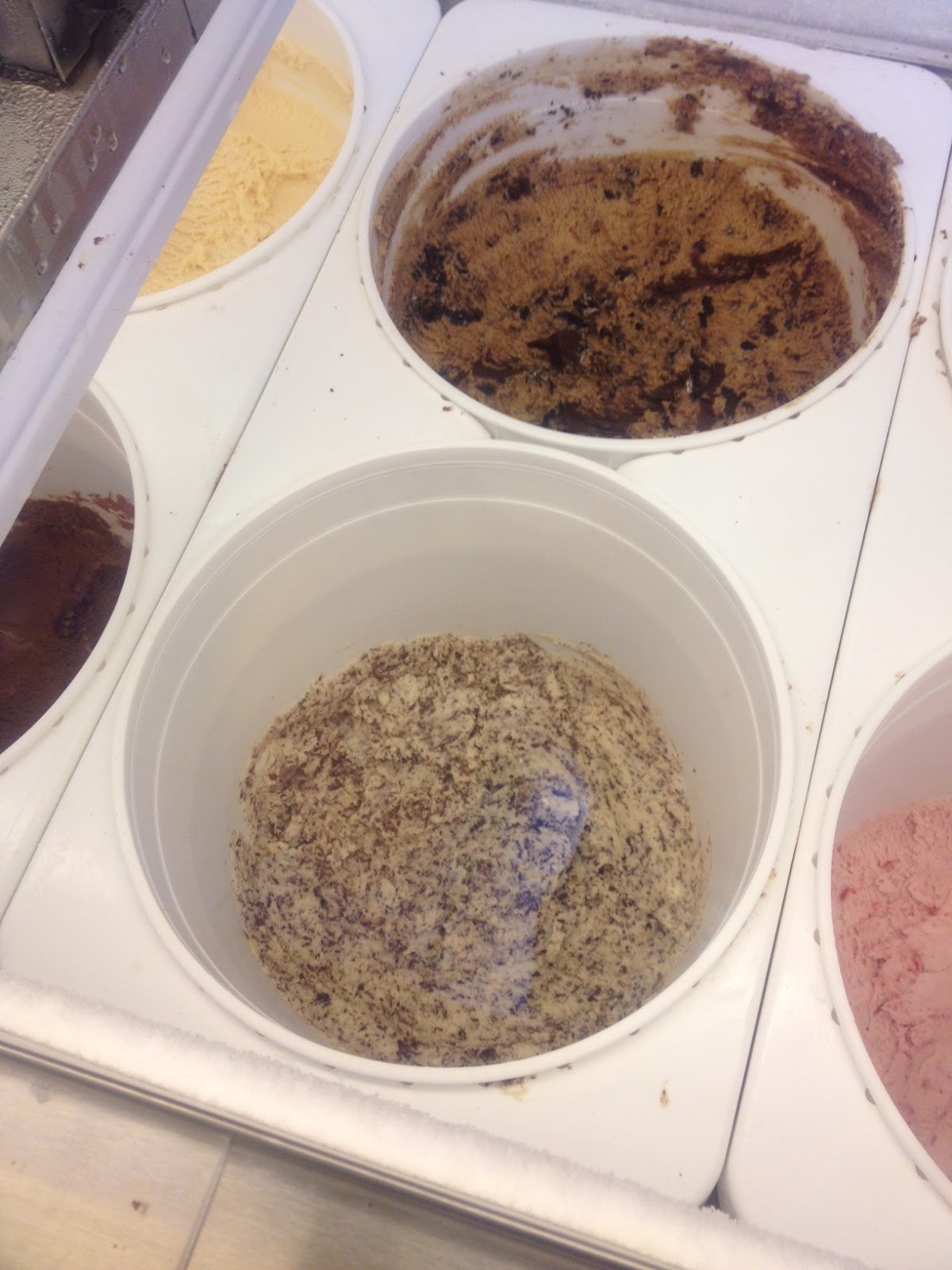
And there was the jewel I had been dreaming of, right there in my little town.  Fearing yet another disillusion, I asked for a sample of chocolate chip ice cream. “We call our chocolate chip ‘Galaxy’”, I was told by the proprietress who had only recently opened her door. Skeptically I put the tasting spoon into my mouth and…..WOW!!!!!!   This was the real thing, the best I had ever tasted, bar none.

I asked Maraline Olson, that proprietress, (Mimi) how she had come to bring everybody’s ice cream dream to our little town.  The way she told it, she had come here from New York wanting to settle and was studying business at Santa Rosa Junior College when a professor advised his students who wondered what business to go into to delve into something they loved and felt passion for.  When Maraline heard those words, ice cream came to mind.

The recipes available for home-made ice cream exist in the thousands, perhaps the tens of thousands and they mostly lead you to duplicates of mediocrity ubiquitously available all over our planet.  Maraline had to rise far above mediocrity to make something special happen in her world, and she set about to create her own recipes.

I will never forget the look on her face when I asked her what her formula consisted of.  Her warm and knowing smile disappeared from her face to be replaced with a look you would expect to see on the countenance of an agent of the National Security Agency who had just been asked about America’s most guarded nuclear secrets.  She did not ask me to leave, but had I pursued it further, my guess is that she would have turned away and left me standing there.  Instead we both smiled at each other and I ordered the biggest milk shake she could make me out of Galaxy ice cream.

I owned a diamond factory in the county seat (Santa Rosa) at the time.  My drive home took me by, you guessed it, Screamin’ Mimi’s every day of the week and I took full advantage of my new find and repeated my Galaxy treat daily.  I could not believe how perfect and smooth that ice cream was, how awesome the taste, texture, richness.  It was one of those experiences that make your senses report to you that you are experiencing something world-class, something that is the product of another human’s passion to achieve greatness.

Slowly but surely people began to flock to Mimi’s from Sebastopol, from other Sonoma County towns, then other states and other countries.  Maraline put a map up on the wall along which the line forms to order up your treats.  She provided little colored push pins for customers to insert on the map indicating where they came from.  I am including a photograph of that map, still there, showing that Mimi’s fame now reaches around the world.

Hats off to anybody with that special, highly revered quality that puts him or her on a path to greatness fueled by the kind of passion we all admire.  Hats off to the business professor who pointed to that path and suggested Marline follow her passion.  By doing so, Maraline Olson has become a pillar of our community, inflexible in the quest for quality, forever devoted to the highest standards there are.  If you like ice cream, you will be floored by the Screamin’ Mimi’s experience.  Trust me.

Here is how she puts it:

Our Purpose at Screamin' Mimi's . . .

      Ice cream is fun, but we take it seriously! Our passion is to make the very best ice cream and sorbet in the world. We feature the finest, all natural ingredients from all over the world including fresh products from Sonoma County. We can taste the difference and we think you will too.


Richard von Sternberg
September 27, 2012